What it does for your field.

Like the lab soil test you send off once a year, except you can read this one every day.

  • You buy seed once a year and guess which variety suits the field.

    Varieties ranked on your own microclimate, once the field has a season behind it.

  • A nutrient deficit found at harvest is found too late to save the crop.

    Live soil readings and plain-language alerts while there is still time to act.

  • Irrigation runs on the calendar and the forecast, not on the soil.

    Water the fields that need it, and leave the ones that do not.

  • Fertilising the whole field at one rate wastes both input and yield.

    Doses tuned to each field, against an RB209 plan you can show anyone.

  • Fertiliser goes on to a plan written before the season started.

    A rate and a date drawn from what the soil actually holds this week.

  • SFI, NVZ and the Farming Rules for Water all want parcel-level evidence on demand.

    The record is written as the work happens, and exports when asked.

One loop, from the field to the record.

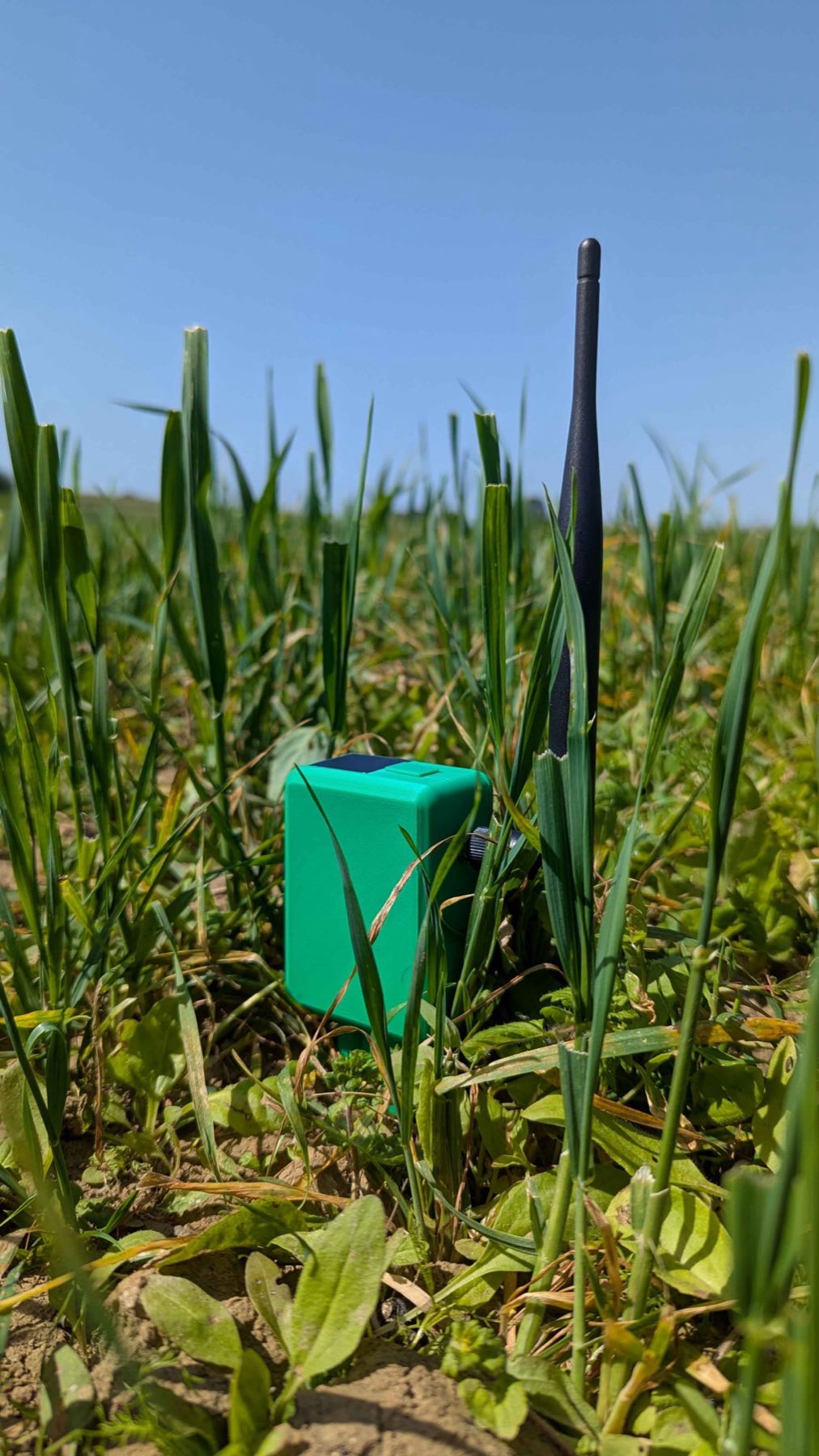
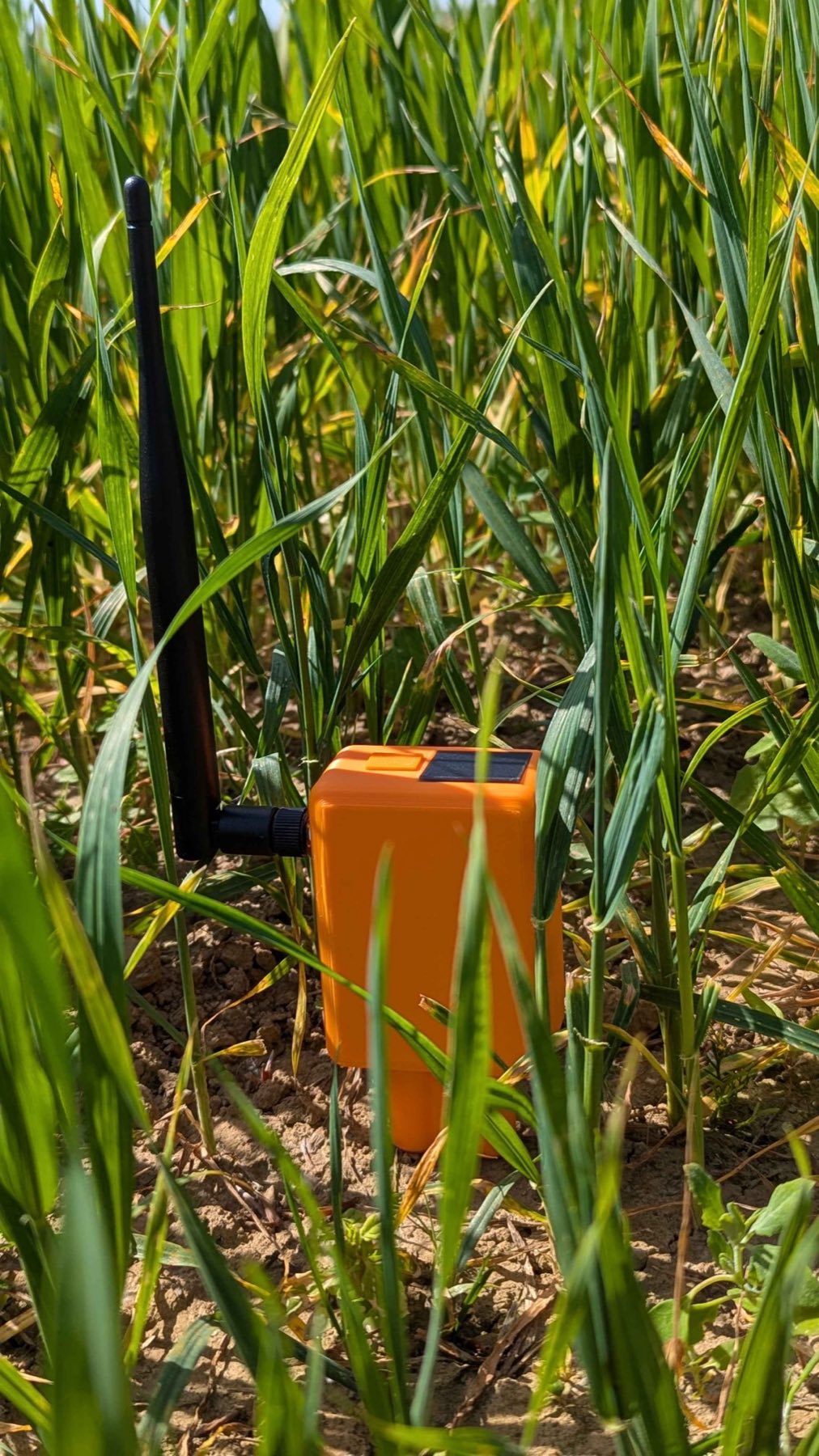
AgriHub360 solar-powered sensor standing among green wheat, antenna up
The sensor
Solar-powered and wireless. In the ground in minutes.
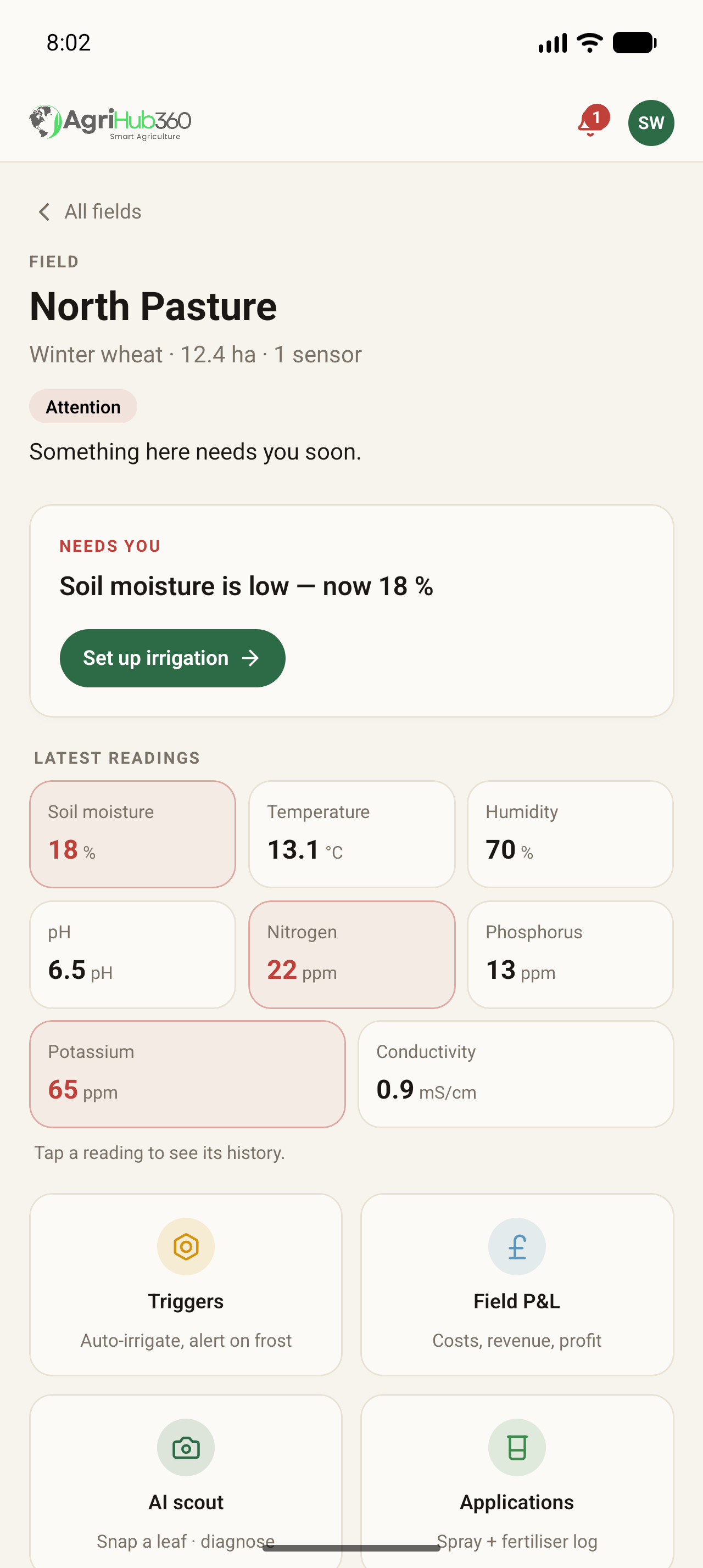
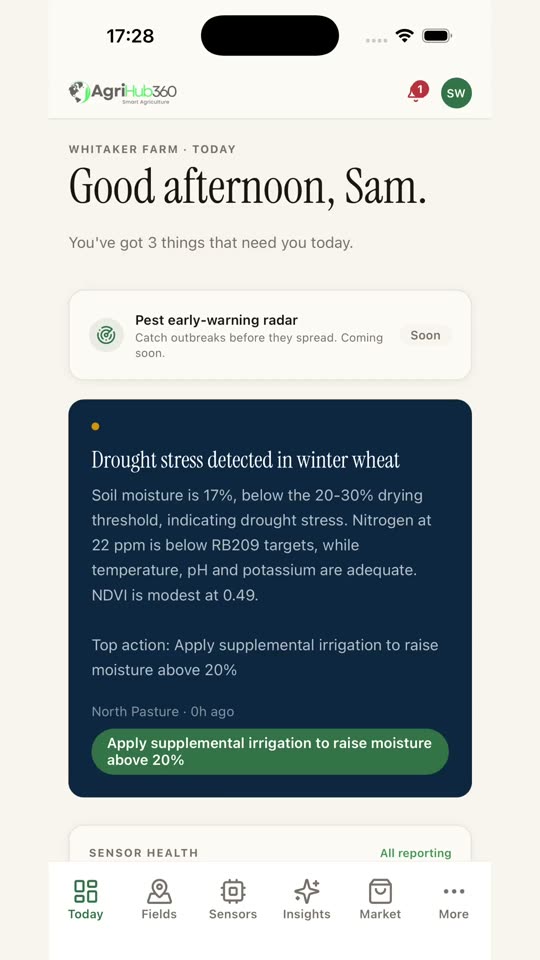
The AgriHub360 app on a phone, showing a field's live soil readings
On your phone
Live field readings, in your pocket.
Close-up of the orange sensor unit planted in the soil between crop rows
In the field
Built to live in the soil, season after season.
app.agrihub360.com
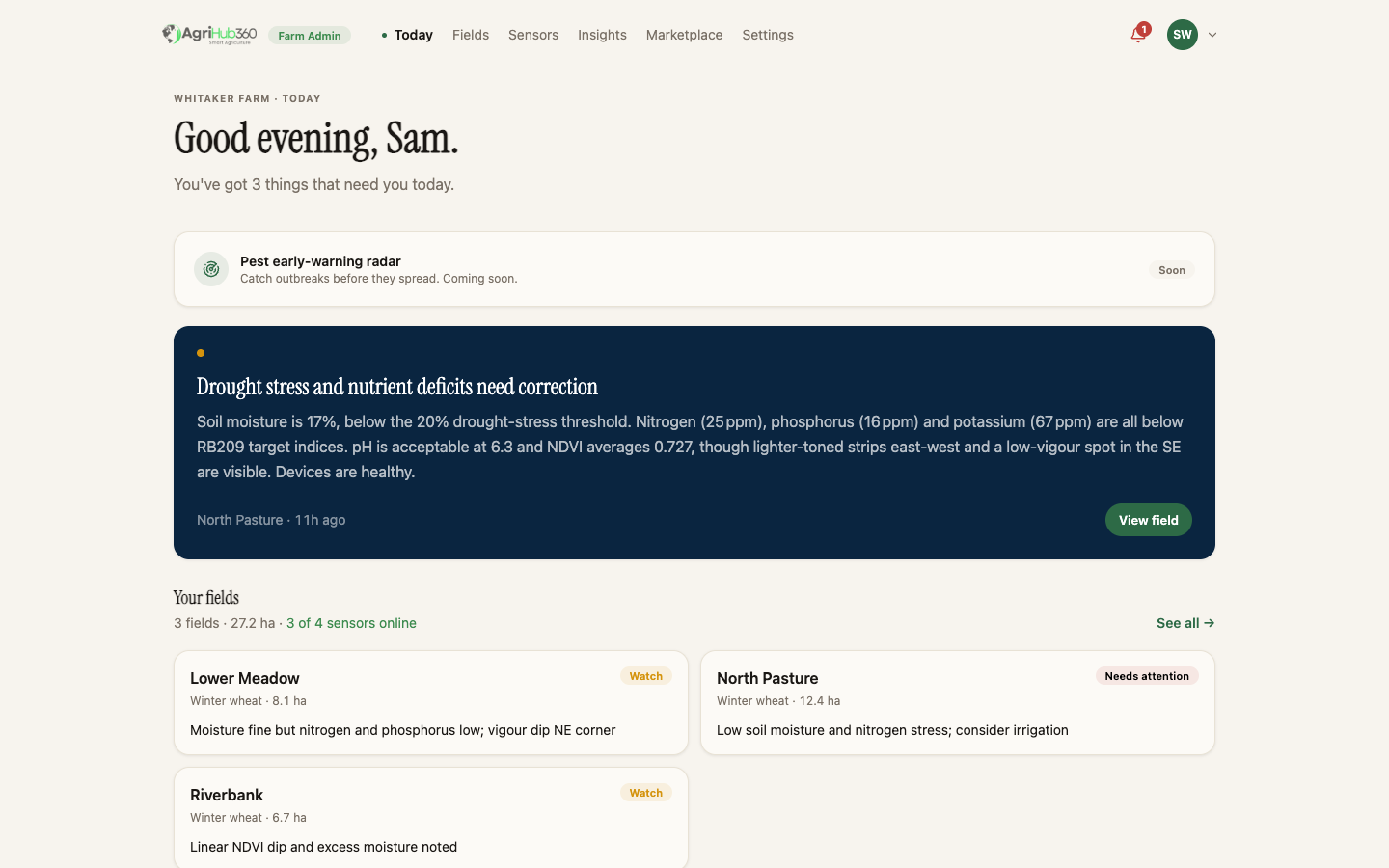
The AgriHub360 web dashboard, showing field status and a plain-language alert
The dashboard
Plain-language alerts instead of raw graphs.
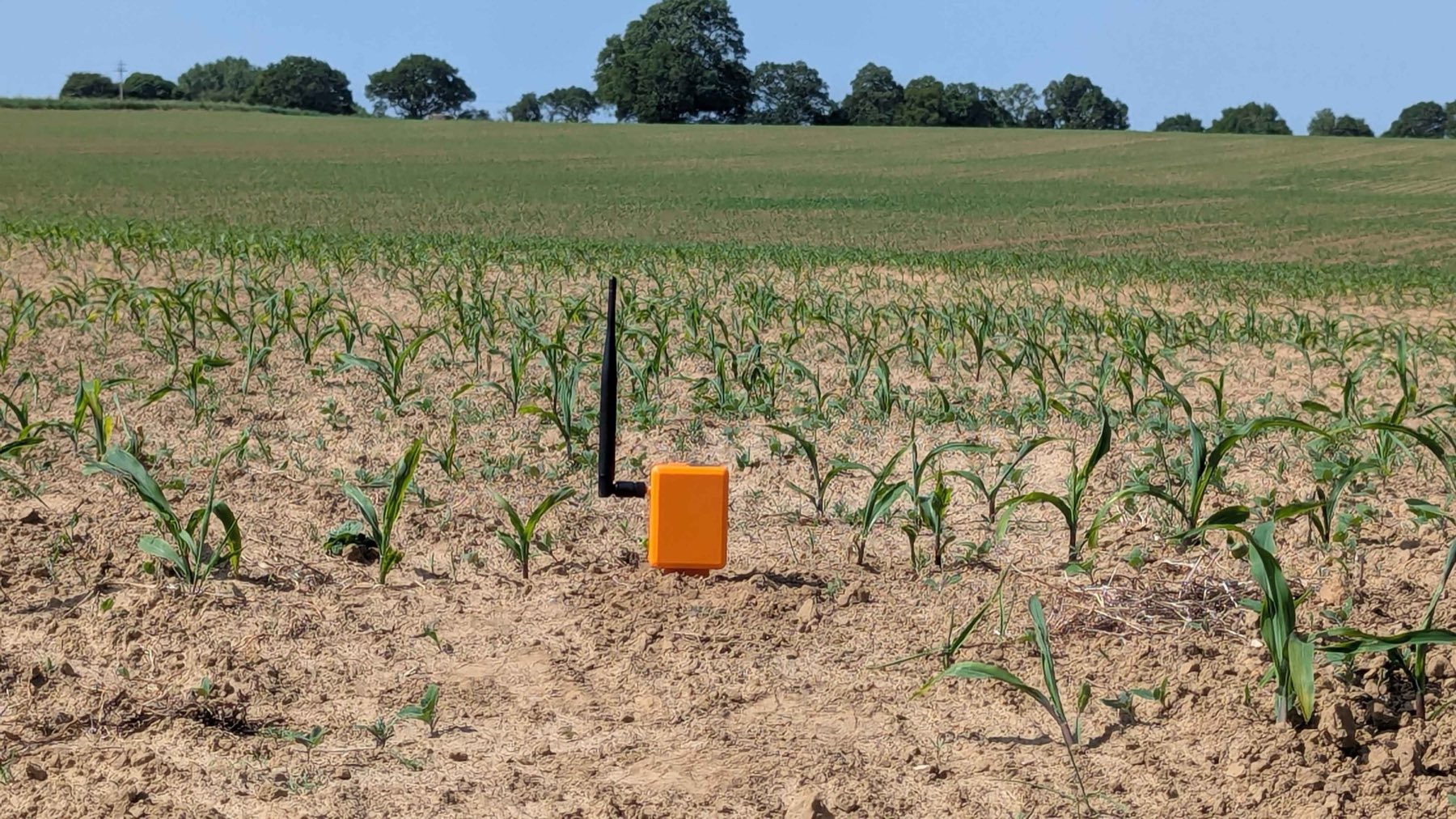
Wide view of a young maize field with an AgriHub360 sensor in the foreground
On a real farm
Field-tested on UK arable land.

See it doing the job.

Real screens, real readings, under a minute each.

First frame of the alerts capture Play · 0:40

Alerts

From reading to alert to action.

The sensor spots nitrate falling. The app turns it into one sentence with a deadline, and one button that tells the crew.

  • The alert gives you the deadline as well as the problem
  • Readable from the cab, with no chart to interpret
  • Every alert traces back to the reading behind it
First frame of the timing capture Play · 0:43

Timing

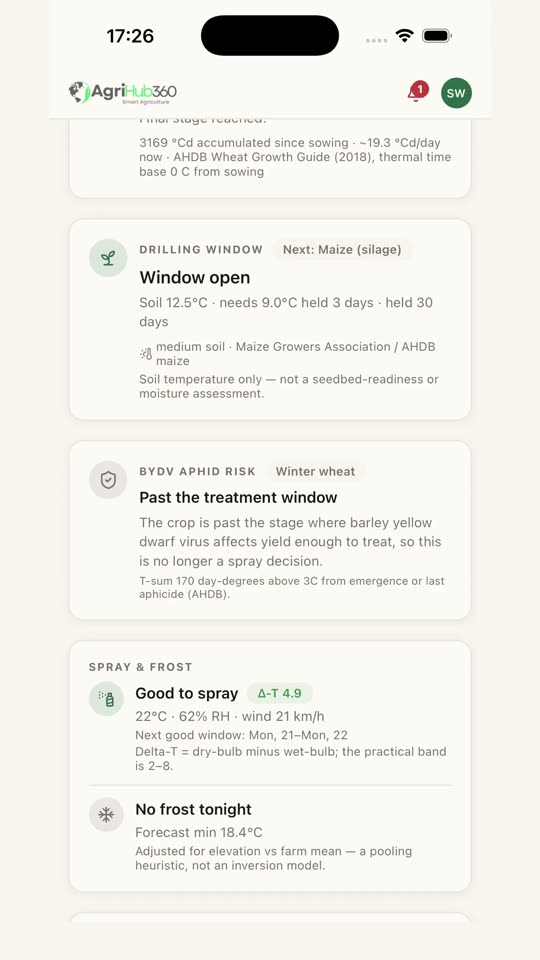
Catch the working window.

Soil temperature opens the drilling window. Delta-T and frost risk set the spray window. You see the span and pick the day.

  • Drilling: threshold held N consecutive days, per crop
  • Spraying: delta-T band plus frost cut-off, hour by hour
  • Trafficability on clay is on the backlog
First frame of the compliance capture Play · 0:33

Compliance

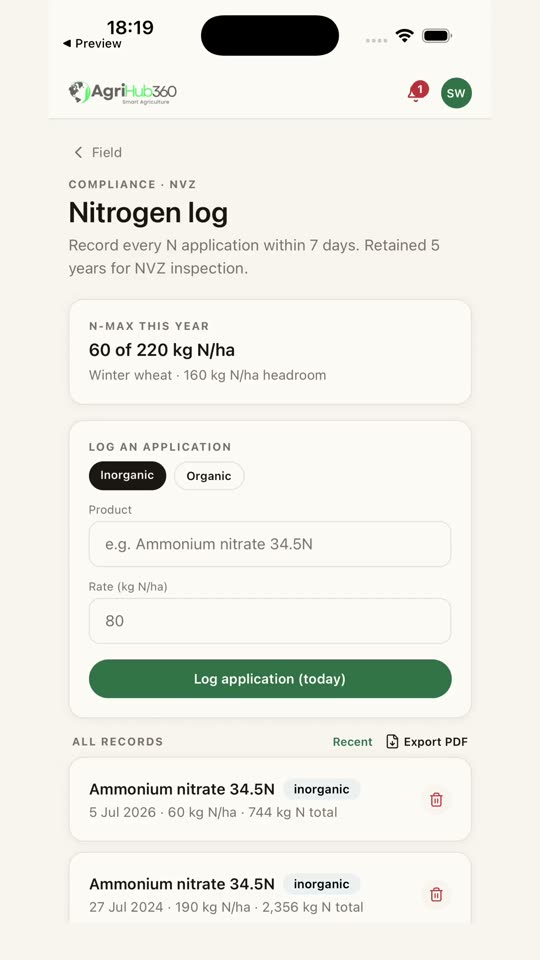
The inspection, already filed.

Every fertiliser application logged within seven days, kept for the five years NVZ asks for, exported as a PDF the RPA recognises.

  • NVZ nitrogen records, per farm and per year
  • SFI 2026 evidence packs per registered action
  • RB209-aligned plans behind every recommendation
First frame of the seed capture Play · 0:40

Seed

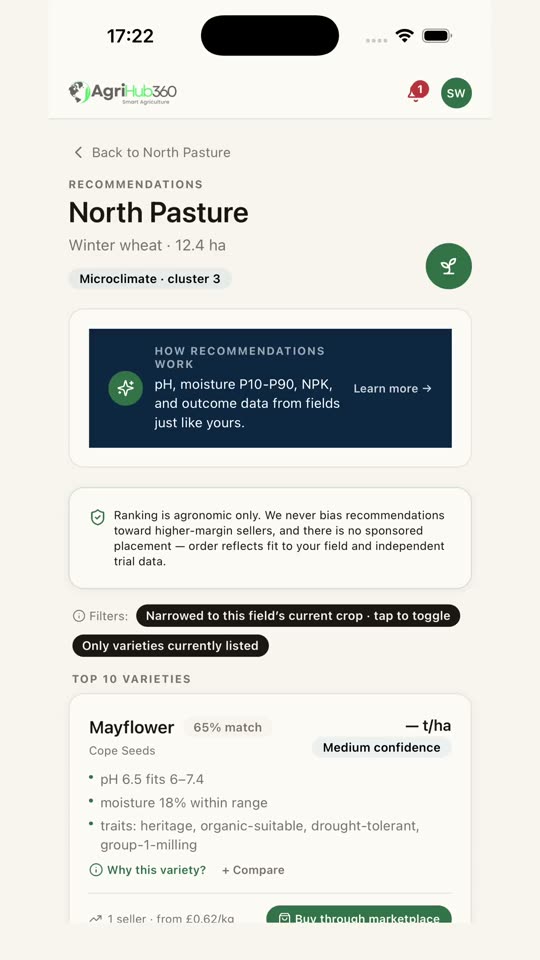
Varieties ranked on your own microclimate.

AHDB Recommended List trials, calibrated against what your soil did this season.

  • Cross-breeder Recommended List data, not one breeder’s portal
  • A confidence label on every ranking
  • Order from the cheapest listed seller

From a soil reading to what you do next.

Four steps, no training course.

  1. 01

    Sense

    A probe in the ground reads soil moisture, nutrients, pH and temperature.

  2. 02

    Relay

    Readings travel over a solar-powered mesh to one gateway, with no wiring to lay.

  3. 03

    Analyse

    We track the trends and flag trouble before you would catch it walking the field.

  4. 04

    Act

    Plain steps on what to feed and when to water, with fertiliser and seed ready to order.

Pick your microclimate.

Three fields. One system. A different answer for each.

Pick a farm, then a field. The variety ranking updates for that exact microclimate.

Free-draining chalk downland. Drought-prone summers, shallow topsoil.

8.1 pH avg
18% Soil moisture
15°C Soil temp
610 mm Annual rainfall
Best varieties for South down field Predicted yield vs. a standard variety
  1. 1
    Mayflower Senova
    Drought-tolerant. Strong root architecture for shallow soil.
    +14% high
  2. 2
    Skyfall KWS
    Performs reliably on chalk with adequate spring rain.
    +9% med
  3. 3
    Crusoe Limagrain
    Loses ground without supplementary irrigation.
    +4% low
See this on your land →

Demo data only. Your real recommendations are worked out for your own fields each season, from your live sensor readings.

AgriHub360 pilot

Join the pilot

Leave your details and a founder will get back to you about a pilot on your fields, usually within two working days.

or email us

We use your details only to reply. No third-party trackers.

Thank you.

We have your details and will reply within two working days.